Garlics are important garden crops that are very nutritious and beneficial to human health. Garlics are plants that can be grown by anyone who loves to garden and wants to have a beautiful taste of it, however, there is another benefit of garlic that some people do not pay much attention to.
Garlic can be stored for a very long time (6 months plus) making the rate at which they can be used proficiently.
Garlic can either be grown during the spring season and autumn and it can last for about eight years before it attains maturity and this makes it very important to know how to keep this crop for long.
This crop, garlic, is very important and it can be grown by just anyone who loves to stay healthy and there are certain things that you need to learn pertaining to it.
Garlic is a bulbous vegetable plant and it is botanically referred to as Allium sativum; belonging to the family of onions.
Harvesting and storing cloves of garlic are very important things that we must learn to do so as to be able to have it all year long.
Garlics are very important vegetable plants and being able to decipher the right time to carry out these activities (harvesting and storing) is of great importance and interest.
Having a garden filled with suitable garlic plants is quite astonishing and knowing how to keep it around and also store it for a long period is of great essence.
There are certain factors that affect the harvest and storage of the garlics and one of them is the type of garlic grown.
In this article, we will discuss more on the steps involved in harvesting garlic from the soil as well as how to store garlic for a lasting period.
When is the right time to harvest garlics?
Knowing the right time to harvest garlic is very important, having the understanding of when to carry it out is also of great essence as harvesting when they are yet to mature or too mature can lead to a lot of problems.
The harvest period can vary as a result of climate variation so it is important to be able to determine when harvesting is necessary for garlic.
When the foliage close to the base of the plant begins to turn brownish and in some cases, the brown leaves might have fallen off and decayed by the bacteria in the soil.
Garlic does have lots of green leaves when they attain maturity, so it is very important to know when to harvest and you can always keep track of the time of planting so as to know when the right time to be more observant might be.
Before harvesting, make sure to check some of the garlics i.e. you should harvest a few bulbs and make sure that the head is very firm and the skin in between the cloves is intact. If the bulbs are intact and firm, then it is ripe for harvest.
Tips on how to Harvest Garlics
After being certain of the plant’s maturity, the next line of action is to harvest them. Harvesting is an important thing to pay attention to so as not to damage the plant; therefore making it unsuitable for later use.
In this section, we will take you through some tips on how the harvesting of garlic is to be carried out.
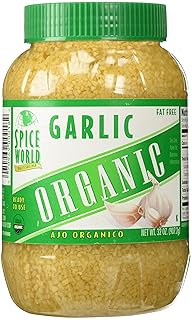
==> Spice World, ORGANIC GARLIC – LARGE Container – 32 OZ
Loosen the soil:
The soil around the base of the plant must be loosened properly so as to ensure that the plant can be easily raised from the soil without getting damaged from pulling.
Hard soil makes it very difficult to pull out deep-rooted garlic and can as well cause damages to the body of the bulb. You can make use of a garden fork or hand trowel to carry out this operation.
Lift the garlic bulbs and greens carefully:
The matured garlic bulbs should be lifted from the soil carefully from the base. Keep the material used for lifting the garlic bulb at its base so as to avoid bruising the body of the garlics so as to avoid rotting of the crop. Any form of damage to the bulb will reduce its level of storability.
Get rid of dirt:
The dirt on the body of the bulbs must be gently removed with the use of a brush or shaking it off with by hand.
This should be done almost immediately after lifting from the soil. Avoid rinsing the bulbs with water as this can damage the plant and make it unsuitable for storage.
NB: before storing the garlic bulb, there is an important activity that needs to be carried out to make it suitable for long-time storage and to retain its lovely taste. This activity is regarded as Curing and we will discuss more about it in the following section.
How to Cure Garlics
Curing is a simple terminology for drying. Garlic needs to be well dried before storing them for future use and while storing, it is also important to make sure that they do not lose their taste during this long storage period. Below are some steps on how to cure garlic:
Remove any remaining dirt:
If after harvesting there is still minute dirt on the body of the bulbs, it is important to clean them off as soon as possible before curing is carried out. A soft-mouthed brush will go a long way in helping to achieve that.
Identify different types of garlics (optional):
If you are someone who grows garlic of different types on your garden, identifying them just after harvesting is important.
You can make use of a tiny rope to tie the plants together and to ensure that they are well arranged together as this can help you identify the taste of the plant much better and conveniently.
Leave the stalks and roots:
The stalks (grass-like part) and the roots should be left during the period of curing to dry. Removing these parts while wet can make the bulbs get damaged or can lead to decay.
Keep in a well-ventilated place:
These garlics should be stored in a place that has proper air circulation. Keeping in a place that has just the smallest sun exposure can cause the plant to lose its taste. The curing of the garlic bulb should be carried out for a period of three to four weeks.
NB: after drying, the stalks should be reduced to a small height or completely removed and the roots should be gotten rid of.
Tips on How to Store Garlic
Harvesting and curing garlic will not be very effective if the crops are not well stored and taken good care of. In this section of the article, I will take you through some tips on how to carefully store your garlic bulbs.
Know your garlics:
The garlic plants that are being stored must be well known and you must know much about each of them. There are different types of garlic plants and they will be discussed below briefly:
Softneck varieties:
This variety of garlic usually has necks that are very soft after harvesting and they are less winter hardy. These types of varieties do have very intense flavors.
Hardneck varieties:
This variety of garlic is extremely cold hardy and they can be stored for a very long time if well cured. They have a mild flavor.
Tie garlics together:
The garlic crops should be tied together in multiples of tens and twenties. The tied plants should be well tied and can be placed in a place that is free of sunlight.
Store at specific temperatures:
The garlic can be stored at a temperature of 15 to 21 degrees centigrade at low humidity for 1 to 2 months. Storing in a dark, dry space at a temperature of 0 to 4-degree centigrade for several months.
The hardneck garlic can be kept in the refrigerator and will be stored for 6 to 9 months. NB: garlic that develops molds must be discarded and gotten rid of.
Conclusion
The garlic plant must be well stored and harvested. This will ensure that the plant harvesting is carefully done so that you can store garlic for use over a much longer time.
On behalf of the author, thank you so much for taking the time to read this article !
